Showing posts with label social behaviour. Show all posts

Friday, 15 May 2009

The Trial at Lunar House


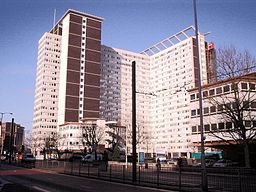
After many weeks of gathering documents from my Faculty and my bank, sending inane emails to various administrators and finally* filling out a 55-page form, I headed down to the Public Enquiry Office of Immigration & Border Control in Croydon (South of London) yesterday to extend my student visa. The six hours spent in public transport was uncomfortable, but the experience really came to its own inside Lunar House itself, the 1970s government building shown in the photograph above. As I followed that first painted red line out the front leading to security check, I had no clue just how fitting the name - a nod to the moon landings - would be.

The operation kicked off by lining up to have bags scanned, lining up to have documents checked and approved and a case number given, being directed upstairs, having paperwork checked at bottom of stairs and top of stairs, and lining up to have documents checked again and to pay the £565 fee. It then meant joining over a hundred other people (and their bored, grizzly kids) on rows of blue plastic chairs bolted in to face a long line of glass booths, booths which were designed to shield the case workers from us slipshod foreigners. The security staff (dotted every 10 metres) was clearly straight from the set of EastEnders: cheeky, thick necked, balding young guys and white-blond, throaty, older women with frosty make up.

As I sat on a sticky chair, numbers were called out every few seconds by automation. Often different recordings called out over the top of each other. Orange numbers flashed from squares above each booth while the position and progress of our numbers were depicted in a separate visual display. The only other form of entertainment was a slide show of the Border Control's policies and procedures, with the same messages (about their staff not tolerating abuse and their disability facilities) being earnestly read out over and over by alternating people, each representing the various categories of race, gender, religion and age.

After a good 40 minutes (well over an hour since arrival), my number was called. I sat down in front of the young case worker. The applicants' chairs had been bolted a good foot or so back from what would be a natural distance from the counter. This meant we all had to lean forward awkwardly, over-extending our backs, essentially putting our chins or two hands on the counter to hold on. I placed my materials through the chute as directed. Case worker silently looked at them. I stared at the 'panic attack' red button in the middle of a grey box to the right of the case worker. It took me to the control room of 1970s sci-fi movies and I thought I heard the distinct sounds of David Bowie singing Space Oddity. Caseworker typed some things, stamped stuff and then politely told me to take a seat.

I waited over an hour. Little kids started to wail and run and hit their heads on the corners of the seats and wail even more loudly. Some parents tried to sleep on each other. My number was called again and 'they' took my biometric details - digital prints and a photo - for these new biometric ID cards, a scheme that originated, more or less, after the London bombings in 2005. (Now I am here, I couldn't really object, could I?) I plopped back down and stared for an hour and a half. I tried to do some work, but laptops were forbidden and the air was stale. I also forgot to eat, mesmerised by my number flashing on screen, slowly advancing to the front of each electronic queue.

I should be fair, there were some high points, a couple of moments of fuzziness when I sensed that we - applicants from different parts of the world, of different colours and creeds - were all facing this Kafkaesque doorkeeper together. Overhearing the husky security ladies share suggestive jokes and provide nurturing pieces of advice also made me smile.

For several minutes I watched my number sit at the top of the 'case consideration' stream. My number was called and I sat in front of a different case worker. Case worker followed a very similar procedure: checked my forms and passport, typed in my details. She then informed me that my application would have to be sent downstairs to be vertified again because of an internal audit process and that I would have to wait another two hours minimum. Without thinking too much, I calmly told her that I would be hopping on a bus back to Oxford rather than waiting any more (my dwindling mind was fixated on one thing: getting back for a talk by Richard Dawkins) and asked if they would please send my passport to me as and when. Caseworker said, 'But what if you have to come back down because they need you to bring something extra?' I said that given that I had already made it through at least three, possibly seven, checks here today, I was willing to take that risk. She then said she would see if she could get my application looked at by 'floor one' sooner. I thanked her and resumed my spot on sticky seat.

I watched a case worker in the booth next to mine tell a Chinese couple that they would have to wait another 2 hours minimum, which they accepted, deflated. Brushing off concerns about whether or not I was a brat for holding myself to ransom, I made my way outside, determined to inhale some air from this century. Nevertheless, leaving the building also meant having to go through security and checks again so, I would say to others, it is only just about worth it.

While I waited another 30 minutes, I filled out a feedback card. My two suggestions were that the security staff be given greater role diversity or responsibility as their boredom was making them jumpy and erratic and that the case workers be trained to display some sense of awareness of just how long and dull the process is as their neutral and sometimes sharp expressions were hard to take after 4 hours+ of waiting in one room. I was called and reunited with my beloved passport. My application for an extension of my student visa had been approved.

Just to tie up the blogging proceedings (and I thank you for joining me), I think my final few minutes at Lunar House were symbolic. As I left the booth for the final time, I announced to a few people still waiting, 'It can be done, Ladies and Gentlemen. This process does have a finish, I assure you.' They were all pretty much dribbling by this time and I had no takers. I pranced over to the tired kiosk and immediately spotted the gold of a Crunchie being shown off by the plastic-wrapped beige chicken rolls. I took out my pennies, ready to get some honeycomb goodness. With the giddy enthusiasm of someone being found not-guilty and facing the press outside the court or of someone leaving prison after being wrongly accused, I trumpetted, 'I am treating myself to a celebratory Crunchie, how much are they?' The heavily-lined lady (who I had heard being pretty funny earlier in the day) replied, without moving any of her face, 'I am about to change the till, you will have to come back in 15 minutes.' I said, 'Can I please just leave you the money as I am finally on my way out.' She said, 'No.' I said, 'OK, well I guess I'll be going then.' She croaked, 'Suit yourself.'


*If you're interested in the form filling process which involved visiting the student advisory service here in Oxford, please let me know. I can share a wonderful email my boyfriend sent me to make me feel better about my apparent failures on this front.

Wednesday, 22 April 2009

How to Survive Social Interactions in Oxford part 2

photo by: Arkadyevna

I know someone who regularly uses this social tool in group situations:

When someone is in the middle of telling a story or giving an opinion and everyone else is listening, this person will single out one of the listeners and ask loudly whether he or she has read X (an obscure theorist, poet or novelist). The person who had the floor then becomes confused and offended, and the person who was asked the sudden question feels either flattered or embarrassed. Either way, everyone ends up abandoning the conversation to pay respect to this person's intellect and taste. That's just one of the ways of asserting control around here, of redirecting traffic your way. (I use my blog instead...control, control!)

Saturday, 11 April 2009

Lessons for Next Time

photo by: Rustman

I was at a three-day conference this week. I met up with some academic friends from the circuit, I attended a few fascinating presentations from various fields (something that always makes me feel less isolated and more inspired about the academic enterprise), and I received a lot of positive feedback after my paper.

However, it was also terribly exhausting. These days, even heading to the shops can be a small test of character so I am not sure how I thought mingling with over two hundred cerebralites would be a supple experience. I have been assured that this general ickiness is thesis-related. But just in case things don't change after submission, I have written myself a list of things I need to read before the next conference:


Your Pre-Conference Reminder

  1. Arrive with some sense of stillness. You are always zonked by the time you walk past the first set of publishers' stalls after registration. Pack earlier. Leave the evening before for relaxation.

  2. Give a positive comment before questions and comments (because you're almost always enthused by the research going on out there!).

  3. Avoid responding vocally to phrases like 'transferable skills' or 'employability' in other people's presentations unless you have written down my question or comment beforehand. It's essentially an emotional response and should probably be left to eye-twitching unless an answerable question can be posed or a measured comment can be made.

  4. Remember to take a watch or finally buckle and trade in your 2004 phone for one with some useful applications (and some degree of attractiveness). Having to ask a fellow participant to provide your wake-up calls each day (via mobile phone) isn't smooth.

  5. Avoid the biscuits at afternoon tea. They make you zone out during the last session and contribute to your erratic responses to certain buzz words.

  6. Be more accommodating and subdued when accepting feedback. Maybe don't say, in response to someone suggesting you read more Bourdieu, that while you like his work, you think that most empirical researchers tackle the agency-structure problem by producing one paragraph that summarises his concepts of disposition, field and habitus and then simply present their findings. That's probably unwisely presuming that audience members (in front of their peers) know that the spirit behind very nearly everything you say in any context is good and that of course you appreciate their advice.

  7. Red wine at the social events is not your ally. It doesn't matter that everyone else is drinking loads of it. (Actually, I think you learnt this from last time and did well on this front. Keep up the good work!)

  8. Account for the extra time needed to unwind before falling asleep each night. Travelodges, one of the premier destinations for student-participants, are strange institutions with lots of noise and pinewood, unnervingly young staff, arbitrary heating and no phones (and therefore no wake-up calls). You know you need optimum conditions for a restful sleep.

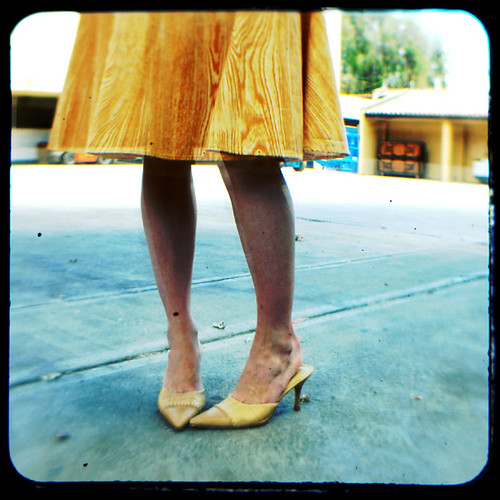
I like the picture above as it suggests coyness (which is how I feel about my reminder list), but I realise that toes touching also suggests feminine meekness, and may be anti-feminist of me. I may go off it and change it.

Monday, 6 April 2009

Elite University Syndrome (EUS)


Early symptoms:

  • Feeling exhausted and inadequate after social interactions with other Elite University students, but not knowing why.

Later symptoms:

  • Recognising a growing resentment towards the insatiable ambition and completely unoriginal self-promotion of certain Elite University students, and yet a striking weakness when it comes to doing anything about it.

Signs that you need to go to A&E:

  • When all your friends are in fact frenemies, but you can't risk losing them because there's a chance, you think, that they will be able to influence your future status in some way, and one may even become the leader of your home country very soon.

I have protected myself against EUS, not with an inoculation (like doing some NGO work in a developing country or starting pentathalon training), but by staying out of infected areas and wearing a mask; I have been focusing my attention on smaller, intimate dinners and drinks with people I truly like and admire (ie those who are super smart, but relatively cheerful and lazy). But the bug is undoubtedly spreading, making loads of people around me question their intelligence, capabilities and future careers. EUS seems to correlate with flu time (early Spring and late Autumn), but I am sure some arsy stats whizz could isolate more likely variables and let me know (after reliving a recent, hugely successful fundraising event he or she organised of course).

Sunday, 1 March 2009

How to Survive Social Interactions in Oxford part 1

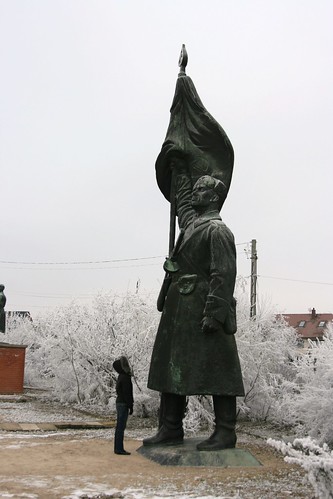
Me in front of a Liberation Monument in Momento Park, Budapest


Some tips for casual Friday night conversation in a bar or pub:

  1. Have a few politician stories to share, from personal scandals and fashion faux pas to early promises, mottos and soundbites that came back to haunt them. Oxford students eat this up.
  2. Know something about the financial state and organisational culture of the national broadcating companies of a few countries.
  3. Be prepared for the introduction or premise to a story to be argued about. For instance, if you want to talk about how something was embarrassing because...someone might well interrupt you and question the sincerity of your embarrassment given that you're telling the story.
  4. You simply must understand or at least be able to talk about a few aspects of the current financial crisis, corporate governance and renewable energy. It's preferable to have been to a conference on one of these that week.
  5. Take along your husband or wife as back-up (yours or someone who can stand in as one), someone who is ostensibly unaffected and even unpolished that is until you're intellectually challenged by someone at which point he/she will automatically turn into a fiercely erudite lion/lioness and paw your challenger to the floor. Two is better than one.
  6. Don't underestimate the coward factor. People very rarely check anyone for poor, unkind or distasteful behaviour here partly because they fear the transgressor may rule them one day in some form or other. Of course, certain behaviour is discussed behind the transgressor's back, but very carefully and only after several qualifications and other acts of due diligence.
  7. If you want to get a cheap laugh then say something saucy and cute, but remember: no matter how much they laugh and seem to enjoy your drollery, you're probably actually going backwards in the overall approval ratings. Being funny = one step forward, two back. Think medium-term.

Monday, 9 February 2009

Dummy Mummy

Photo by: Redo

One of my friends, KT, sent me this article to add to my Article Dump, The Dummy Mummy Decade: Boring, Selfish, Smug by Rachel Cooke:

In the past decade...- a decade that began, if you are in search of neat bookends, with the birth of Brooklyn Beckham - a growing number of women have reverted, 50s-style, to identifying themselves primarily, vociferously, and sometimes exclusively, as mothers. They fetishise childbirth, and obsess about all that follows it, in a way that is almost, if not quite, beyond satire, and which makes me feel a bit sick.
I feel sympathy for Cooke's position and agree with most of her opinions, but I definitely don't feel quite as angry about this development as she does. Plus, I think it's a bit creepy (and boring, selfish and smug?) when she says how lucky she is that most of her friends have not turned into dummy mummies. Must be nice trotting past your pals on a high horse and judging them.

Saturday, 24 January 2009

AnthroMagic

Every now and then I consider myself a natural anthropologist. Everything around me suddenly seems exotic, human behaviour becomes so dramatically interesting, and I seem to be able to see more clearly than usual what is going on and why. I rarely set out to put on my anthrospectacles, I just find I start commentating on my surroundings with a David Attenborough voice in my head.


On Friday, I enjoyed twenty minutes of 'thick description' magic during my lunch break. I was marching towards the revolving door to leave my Department for the local sandwich shop when I overheard these three men, I guess in their early sixties, two American and one English (or should I say British?) chuffing about how the last time they had been together had been in a pub in London in 69 where they ended up having "a fierce discussion about Vietnam." The English grey was gleeful about the fact that he had been on team Anti-Vietnam, surely bolstered by Obama's inauguration and the general feel. The shorter American began to defend his (still misunderstood!) ManChild argument, while at the same time tried to not seem bothered ("I can laugh at myself now, surely?"). He laughed at Anglo's taunts but only for two seconds and then he would frown and say, "Well, my actual argument was...". He ended up taking third person aside to tell him what he meant. "I was actually refuting just a small aspect of...". I became intrigued.

Then one of the guys made it through the revolving doors. The next one stepped slightly awkwardly into his own section which was swinging around rather quickly. Then the last guy went to hop in with his old pal, and then at the last minute realised that he would probably have to get quite close to his back, probably with some sort of gyrating motion, and even help push the glass leave with him so he decided to abort his plan and he was momentarily crushed by the uncaring wall. He pulled himself out, gathered himself, looked around and was clearly relieved that his friends hadn't seen him. He had successfully avoided a front-to-back man hug with someone he hadn't seen in forty years.

* * *
A few minutes later, on the way to the sandwich shop past the building site, a tall, ludicriously perfect, Nordic student moved effortlessly toward frowny me. His tanned, symmetrical face was displayed to full effect by a ponce headband pulling back his thick, blond hair. His clothes were new and clean - a rare spot in a town of chavs and luvvies. His gait took up more room than mine, his chin was elevated, and he was breathing through his well-shaped nostrils. As we passed, he looked down at me with an expression that was only not one of aloofness because he did in fact care that people noticed him. But there was nothing warm, or obliging in his eyes. I noticed a hint of mild contempt for me - as if I were just another piece of space junk that had fallen into his tractor beam. These affluent, insanely pretty boys scare me. They will never meet you half-way, let alone laugh freely at your jokes. Never. Ever.

* * *

In the sandwich shop, I decided to become irritated. I started to focus on the clogged queue. Everyone who goes to this place knows that the line works in a wonky circle. It starts at the door, proceeds along the back of the shop, loops around to the front counter where you order then circuits towards money man and out the door (with sandwich) again. Well, these Frenchies with their pantalons, ripped jumpers and writing on their hands, decided to just start to consider that they were in a sandwich shop and that there was a whole range of sandwich options that had been on display since they entered once they were asked for their orders. Then this red-nosed (some skin irritation thing), white-haired, chunky, bejerseyed undergraduate in front of me continued to maintain two metres between him and the next person so that I couldn't move up. Apparently, he did not sense the difference between being in the back part of the loop to the front part. They're worlds apart as far as I am concerned. Not even a competition. And then there was this guy who was wearing all different shades of brown and couldn't look at the chatty servers in the eye who reached behind my back, pulled open the fridge door to get his Coke and knocked me in the back of the head. I said, "Hey, you know I would have moved had you asked" (I was ready to pounce) and he just opened the door even more against me, grabbed his fizzy fun with his white chubby fingers, and went back to wherever he came from (probably a delta, where he could be invisible).

It was finally my turn to be served and my usual bandana guy gave me that special eye and made all these completely unfunny jokes about how he was going to forget one of my ingredients, about how he couldn't decipher whether I said "toasted" or not ("Toasted please", "Oh you want it untoasted?", "No toasted", "I am jocking with you.") So I was feeling a bit special and flashed him some teeth, but then as I shuffled along to pay my money to the till man, I became aware for the first time that this guy says the same thing to everyone, boys included, and that everyone was becoming ridiculously tongue-tied and docile with him. "No, actually, I've changed my mind", one girl squeaked, "I don't really know what I want. What do you think I should have?" I wanted to bang my head on the counter.

* * *
Outside, bitten by the wind, I was no picture of elegance. I was half-committed to eating in public (as bad as someone deciding to eat out of a bowl on the roadside), which meant I was picking at my food with my fingerless gloves. I looked up and I saw something one rarely sees in Oxford - a rather large, round bottom. They exist (in fact, they're encouraged), but they're usually harnessed by jeans or covered by swathes of coats and jumpers. A lady in the late summer of her life was strutting in front of me in a short black leather jacket cut down the middle by a brush of peroxide hair, and a thin, tight blue skirt to the knee. She wore tired, grey stockings and black ankle boots and had a backpack over her shoulder. When we passed the building site, I watched the workers expectantly (no wiping the mind clean here, I had already judged them) and, the world was in order, they alerted each other by hitting each other on the chest with the back of the hand, grunted and laughed. Then a taxi drove towards us and I could see the driver's religious paraphernalia swinging and entwining above the dash. He stopped at the crossing and as we crossed, he watched her bottom like it was a couple of trays of iced, cream cakes. Then I thought, "OK, We're done." But no, the passenger of the next car that was slowly starting to move, a more senior woman wearing a yellow canvas dress, stared as happily as if she were watching her lawn bowl travel to closest to the jack. I wanted to stop everyone from watching her travelling glutes. But instead I was just quietly relieved when she continued forward and I headed back towards the fast revolving doors.

Friday, 5 December 2008

Christmas Cheer Oxford-Style

Oxford students are always ON, or nearly always, and make that a lot of Oxford students. I am talking about switched on for the Best CV and Cleverest Ever competition. Being on all the time builds up tension and shame, which means that they often 'pass on the sting', to use a neat sociology phrase (although not one that has much weight in certain academic circles), if they see other people not keeping up with them in the bolt through life.

The other day a colleague asked me what he should buy his girlfriend for Christmas, specifically for their agreed upon cheap present exchange. He was thinking a scented candle. That smelt of mother's day or gift from a distant family friend to me so I suggested a pair of long fingerless gloves or a luxurious scarf from Topshop.

Then, from behind a computer, came this snigger from Competitor Student, "He He, that's funny..."

I said smiling, "What do you mean?"

Competitor Student said, "Just hearing you talk about Topshop in the Department, that's just funny to me."

I smiled in a slightly puzzled way and turned to my friend, but what I really wanted to say was: "WAS IT REALLY FUNNY OR WERE YOU JUST SLAPPING ME FOR NOT LINKING IT TO THE PRE-EXISTING LITERATURE? MERRY CHRISTMAS MRS CLAUS!"

Friday, 31 October 2008

Pony and Wolf

I am back in the saddle this week, the write-up saddle, that is. It's been quite slow to get the old pony (a mountain pony, as my friend says) cantering again after a week or so grazing apparently (dealing with intense family stuff).

I am in the middle of a paragraph and am clearly using this blog as escapism. But I am writing about 'ritual ordeal' which draws on the 'humiliation' literature that seems scarily relevant to my life as a DPhil student. The literature mainly comes from sociologists and psychologists interested in various phenomena, from socialization to genocide.

Scholars tend to agree that humiliation - an interaction between two or more people or countries which involves the use of scorn, ridicule, contempt and degrading treatment - is an effective mechanism to ensure the internalization or outward display of various behaviours, norms and values. Typical examples of institutions who use such mechanisms are professions (the military being the most obvious), prisons, schools and the family.

The family is an interesting one. One writer, Dr Donald C. Klein, makes the connection between the conditionality of parental acceptance and approval - a prosocial tool to shape the child into an adult - and the actute and continued sensitivity of humans (and therefore societies) to humiliation and then, in many cases, to any form of criticism.

He cites Mark Twain's The United States of Lyncherdom:

"Each man is afraid of his neighbor's disapproval- a thing which, to the general run of the human race, is more dreaded than wolves and death."
Disapproval is something we fear, but at the same time with which we are familiar. Easy love and acceptance are then often perceived as ambiguous, reckless, uncomfortable, suspicious and/or stupid. At the end of his piece, Klein wonders whether there is another way of socializing children into adults.

In the middle of reading this literature, my supervisor informed me that she was going to be "very hard on me" until I submit my thesis. I am in a strange phase of life where negative stimulus still works very, very well to a certain point (and I am in many ways grateful for the push), but I tend to prefer and am trying to rely more and more on positive encouragement, and less cloudy, fearful motivations (from myself and others).

Nonetheless, it's tough to break old habits and, I've got to say, I am often and still not very far from the humiliation model. Let me know if you have any healthier alternatives for me...I will pass them on to Dr Klein as well!

Monday, 6 October 2008

Freshers' Week

After a long sojourn au countryside, I have finally returned to my College, to a new room overlooking pretty things, which is important. As I type this, in the corner of my eye there is a golden tree being lit up by soft morning light and copied in the rippling water. I am reacquainting myself with matinal lawn-mowing. The College policy is to excessively trim and blow. The leaf-blowing can make me want to crush things. But there is no leaf-blowing today. It is crisp and promising. I am feeling peaceful and ready to work.

It's the start of Noughth Week or Freshers' Week, a week that ends when everyone has Grotty Flu. I went to the College Bar last night to rebond with friends who have returned from various trips, fieldwork stints and write-up caves. I became embroiled in rowing and Australians v New Zealander banter, which didn't thrill me, but the rest was most enjoyable indeed [wobble chin]. We asked about each other's holidays, relationships, research and plans for the year. There are many lovely 'freshers' (new students) and, as a group, they seem ebullient, if a little hyper. Every year has a personality, you see. Since I have been here it has been: eccentric, brutal, earnest, and close and cliquey. It's too early to say for sure what this year's is.

I told Kiwi Fresher, who called me 'Dingo' and kept on mimicking my voice that he had a week to get over me being Australian. He said to give him two days. Deal.

You can already see the grip of College Neurosis over the freshers in their striking need for attention and acceptance. For freshers, Michaelmas Term means an almost constant drive to give sound bites, to make sure everyone knows just how carefree your personality is (It's so carefree, don't you think? Don't you think? Tell me!), to make absolute claims about what you're about and how much you know, to link arms with people you met 30 seconds ago, to give freebie rubs and strokes to everyone - even the catering staff - en route to the toilet or the tray rack, to be involved in every dinner plan (like the international dinner which apparently took place last night), punting session or dress-up activity.

In this kerazy environment, things are often misinterpreted. Last night, for instance, Outrageous 'I drink red wine every night' Fresher completely missed the ironic tone of an admittedly fairly poor (but nonetheless objectively harmless) joke I made about freshers. I didn't think it would bring the house down, but I thought it might elicit a bit of a chortle [cross/ rejection noise from Family Feud].

When I caught Outrageous Fresher alone, I told her that I think she had misunderstood my intentions. She agreed. But it was silly of me, really. Freshers' Week is no laughing matter. There are a lot of exuberant faces, wild hand gestures and petit scandals, all of which come to a crescendo at the Saturday's 'Uniform' (with a hint of slag) bop or College party, but it's all too fresh for the freshers (haha, see what I did there?) to laugh at right now.

Monday, 29 September 2008

Farewell Sweet Youth...


On Sunday, over a scrumptious breakfast at a cafe on Cowley Road, I experienced my first serious bout of 'Holy crap, I am nearly 30 and I am not [insert various personal/ societal expectations and one obvious biological function]!'

I am one of those treasures who has always liked the 'guess my age' game. I have pretty much always been told that I look far younger than I am. 'You fools', I think, 'it's just my smooth skin, puppy eyes and as for that merry glint in in my eye...Well, that's just in wonderful anticipation of being told I look youthful.'

But perhaps this whole squinting at the screen all day has started to take its toll, or perhaps I am more of a drinker than I think I am (I am pretty sure I am of the 'nurse one drink for 3 hours 'kind), or maybe it's all this damned endless worrying about how I might not look or feel young at any point and therefore had better make the most of my youth by acting recklessly that is sapping me of my vital chi. Maybe I should be going to bed for lights out at 9:30pm instead of 11:00pm for some reading and analysing.

In any case, I was reclining against the wine red cushions on the bench, half-committed to the papers, very committed to my hot chocolate, when my new German friend (and it's not that relevant that he's German, but it might explain how seriously I am taking his comment; they're not known for frivolity or exaggeration) made a comment along the lines of me 'getting on in life'. I said, rather perplexed, 'How old do you think I am?' He said, '29'. I said, a little winded, 'Yeah, I am. How did you know?' He replied, 'You can tell it from your eyes, they look like they've seen and experienced a few things' (or something very similar to this, Your Honour). But what I heard was: 'You can tell from your crack whore, heavily-lined eyes that you're a bitter, washed-up, hopeless, has-been who should either be married with brats or at least not hanging out with people in their early 20s'.

I said, 'Wow, most people think I look around 26.' He said, 'Does this bother you? Is this something you worry about all the time?' (Clever bastard). I wanted to say that I felt like he had just drop-kicked me into the backyard BBQ of a team of 30 year olds: the men (big boys) sporting babies strapped to their chests, Mambo T-shirts, cargo shorts and chunky slip-on shoes and the women singlet tops, floral skirts or linen pants, bulky diamond rings and gold sandals. Men tending to the steaks, women tossing the salads. Opinions on property, skiing holidays, school selection and fees competing with the latest Ministry of Sound compilation.

I wanted to say that I hadn't really worried about my age before, and thank him for pointing out my quickening march towards death, and, what's more, for making me feel like that undignified parent who tries to make friends with their children and their children's friends, those ones who brought out Champagne at parties when you were 13 and you sensed that the world wasn't quite as ordered or safe as you'd been led to believe.

What I said was, 'No, no, I am not worried about that at all.' But I am. I am not devastated, I can see the light-hearted side of it all, but I am changed somehow. I know this is tied up with vanity and perhaps I should embrace my overflowing wisdom and more even temperament, but I also feel this whole thing has doused some of my sense of play and sparkle.

If you have any words (your own or of others) that would help me perceive this differently, I would be most grateful.

Thursday, 19 June 2008

Pity Party


While I often scoff at the English, I do admire their steelines (or emotional unavailability) at times. When my (English) boyfriend's friends are having difficult times they will meet at the pub, engage in playful banter of the Jeeves and Wooster variety and go home. Whenever I ask about the psychological well-being of his friends, he provides me with a few broad comments - fish to the seal's mouth - but generally no details. Indeed, Australian men also like to assuage their grief with a spot of tennis, surfing or drinking. That said, the one: one (woe is me) talk is noticeably more popular amongst men these days (along with skin care regimes and long fringes).

Women are more likely (perhaps soon only barely more likely) to share every fear, change of pulse, criticism received, perceived injustice and confrontation. Now, I don't like giving women a hard time - we're beautiful, creative, complex beings and we have enough to deal with already - but I've got to be honest, I'm a bit frustrated with our tendencies to have 'pity parties'.

Pity parties are festivities where people sit around in a cafe, college, or bedroom and go round the group to exchange long, solemn explanations of a series of catastrophes that have happened in the last 24 hours. What's more, even though the feedback is nearly always sympathetic and often very thoughtful and practical, it's not uncommon for one of the other party guests to be heard telling the exact same story of horror to a new earnest listener only hours later. Wanting problems to be validated rather than immediately solved is fine - there's nothing more frustrating than an quickfire solution when you're actually looking for reassurance. But there's also something to be said for exercising 'the right to silence', as Theodore Dalrymple has put it. In other words, not saying anything at all, just letting it pass from the mind, having a brisk walk or a dance in the living room to "Somebody Else's Guy," or even just exercising a bit old fashion suppression (not for too long, of course, and not for things that are actually traumatic and overwhelming).

I have been thinking about this for a while. It came to a particularly intense crescendo when I attended a feedback session for a Springboard (women's professional development) course I was signed up for as a last minute filler. As an aside, I would recommend certain aspects of the course, specifically learning the skills needed to ask for what you want or need from bosses, colleagues and associates. Put simply, this involves communicating in an assertive (not an aggressive or sulky) way and being aware of the 'Flossy' syndrome: the tendency of certain women and some men to work in a diligent, but approval-seeking way whereby colleagues dump more and more work on them - thinking to themselves 'great, a cheap PA as well' - while the poor sod hopes that the boss will take it upon himself or herself to translate their productivity and commitment into financial and status rewards. Na-ah girlfreeeend!

In any case (ahem), all of us decided that a couple of months after the course ended we would get together to discuss what 'specific actions' we'd set for ourselves and whether we'd meet them. This seemed like a beneficial and constructive activity. And on my way there, I had that feeling that the winds of high-spirited, unrestrained joy were going to whip my face so forcefully that I would have to put vaseline on my cheeks. But what transpired was rather the opposite: a bunch of drowsy, pitiful women with rounded shoulders expressing various forms of disssatisfaction about how their specific actions (including having the walls painted as part of the broader 'goal' of finally getting the renovations done) had been thwarted (by lazy tradesmen and unsupportive husbands). Once someone had almost finished what she was saying, at least two women would frenziedly agree and declare their equal or worse painter/tradesman story. While some of the other specific actions were more grand and therefore made me feel slightly less pathetic by association, they still engendered the same response: lots of gasps, dumb nodding faces, 'how are you coping?s' I was waiting for someone to hold their heaving bosom and break down. At least then there would be some sort of bubbling over.

I could barely hide my contempt. Actually, I didn't. My eyes became squinty and I may have chucked out a few barbed comments as a sort of tantrum. I said I didn't want to meet up again if we were just going to sit around and share catastrophes. Not too smooth. It was, of course, partly about my own inadequacies as a queen catastophiser - something that I am trying to shake off rather than indulge (I say, as I write a blog).

Clifford Orwin's description of Neitzsche's view on pity, as a kind of inhuman fear of personal suffering, chimes:

Pity, while a temptation (even the final or most powerful temptation) to the higher man, was primarily the preserve of lower ones. These, Nietzsche dared to think, wallowed in it as swine do in mud, their pity for others being indistinguishable from their pity for themselves. This preoccupation with pity, the modern epidemic (which, as Nietzsche says, glancing at Schopenhauer, “has made even philosophers sick”), was the sign of a declining life form, an anesthetic for incurable sufferers. It pointed the way toward the last man, who would feel nothing and long for nothing.

Although Nietzsche often described himself (and has been described by others) as an immoralist, his ultimate objection to compassion was an ethical one. The core of humanity was its ambition to greatness, and all greatness depended on suffering. The modern project of compassion, then, taken as the elimination of suffering, was ipso facto a campaign against humanity as such in favor of a descent into the subhuman.

I have managed to say to myself already today (in the shower as I began bemoaning my lot), 'Pull yourself together!' (I tried the 'let it pass' approach, but sometimes that's not enough.) That's what I am going to say if one of my friends calls me up for another 45-minute session about the shortcomings of her man. That or, 'please exercise your right to silence'.

Saturday, 14 June 2008

Self-presentation Through Facebook Photo Albums

The other night I was in an insipid bar with fellow graduate students. The mood was grim with the heavy weight of exams, thesis write-ups, and general alcohol and college food-related sluggishness. We self-consciously and frantically cheered each other up with drinking games (throwing a penny in a glass to enforce skulling), grisly dentistry and burn stories, unsubtle sexual comments and by re-enacting happier times together; what have become our collective myths.

But we rode home on our cheap town bikes with flashing LED lights feeling desperate, undignified, wanting, calculating who had received the most attention, why our jokes and anecdotes were not indulged but, rather, taken as challenges for someone else, why no one cared about our academic progress, our families, our dreams and goals since these seemed to get in the way, to be incomprehensible and dull, or to be seen as bait for the insecure and competitive.

Let's face it, most graduate students at elite universities would be more likely to share verbal gun shots than anything else if there weren't the threat of collegial sanctions, and of course if there wasn't some chance that these verbose frenemies would soon become the next leader of one's country, one's boss, a celebrity campaigner with a rainbow family, end up in statue form.

What has become a prevalent way to release envy, tension, boredom, to make things right, to restore a sense of wholesome fun, egalitarianism and community is the immediate creation and posting of Facebook photo albums. Often these albums are created seemingly at the same time that the creator is moaning about their supervisor and necking their house red. Through the creation of online albums, one can present all of those moments where one's social group is together, giggling, leaning on one another, touching breasts, intensely pouting, making silly faces, tipping beer on someone's head, cuddling, smiling crazily. This is where one can erase all those moments only seconds before the photograph was taken where we wondered what on earth we were doing with these people, again, when we wondered whether things would become more interesting if we stayed, when we anxiously hoped that we would be accepted, validated, understood, made to feel clever, funny, popular, astute and special.

Facebook is, as Alice Mathias has said:
an online community theater. In costumes we customize in a backstage makeup room — the Edit Profile page, where we can add a few Favorite Books or touch up our About Me section — we deliver our lines on the very public stage of friends’ walls or photo albums. And because every time we join a network, post a link or make another friend it’s immediately made visible to others via the News Feed, every Facebook act is a soliloquy to our anonymous audience.
Mathias was in all likelihood drawing on Goffman's (1959) dramaturgical analysis. Goffman sees social life as though played out by actors on a stage. Most of our social lives can be divided into the front stage - where we act our formal roles in our encounters with people - and the back stage - where we assemble props and prepare ourselves for these "onstage performances".

This feature of Facebook allows for a curious and disturbing form of self-performance. The photo albums we present to ourselves and to the rest of our online world can eclipse the actual experience (indeed the very act of taking the photographs can engender a sad competition to be included amongst friends). The albums allow us to deceive ourselves and each other that the past was glorious, that we are celebrated.

But sometimes we're not celebrated. I'm still waiting for one of last night's photos to include my exuberant face.

[photo courtesy of mrquicknet under Creative Commons license]