Showing posts with label relationships. Show all posts
Showing posts with label relationships. Show all posts
Monday, 15 March 2010
Notice to Childish Ego:

I was wondering whether you'd mind please taking a ticket and lining up behind other customers in the queue - like thesis, outstanding publication resubmissions, job applications, exercise regime, relaxation and enjoyment, family and friends, balanced diet, regular sleep, and, right at the back there, healthy perspective. This meats and cheese counter is pretty busy right now, and I would ask you to honour the system in place, even if it's pedal powered and steaming.
When (perfectly lovely) ex boyfriend informed me that he is seeing someone else (a reasonable, natural thing), you saw it as some sort of invitation to bolt down the aisle, barge past everyone else (don't think I didn't see that neat elbow in the head to healthy perspective), and start firing your mid-late 90s-style questions about the past and my self-worth, and then you tried to distract everyone by setting up some fancy video montage of their meeting and happy moments together. It will take me some time to forgive you the video - that was low - though I recognise that you get bored sometimes, and that I don't let you run as freely these days.
Anyway, I may deal with you at some point, but, for now, you've had a good day's run around, and I'd like you to take a ticket or, preferably, step away from the counter and scamper back to the sugary cereals.
Right. Next? Thesis?

Saturday, 7 November 2009
Rebooting the Old Blender
I have been ill these past couple of days. I had asked for it. I had been working on, but scrappily, worrying about things, letting worries feed and bleed into others. Sickness is never ideal (ideally, you would not have a backlog at all), but it has, in this case, acted as a circuit breaker by giving me the space to rest and the sense of urgency to get to the bottom of some things that had been overwhelming me.
Writing a thesis is hard enough, not to mention all the fears that a thesis comes to embody, as the supervisor of my friend, Kate, pointed out (such a smart thing to say!). Then, processing the reasons behind and emotions of a break-up (of a long relationship) and coming to terms with being alone (when you really need day-to-day kindness and connection!), on top of 4pm darkness - it was all getting too much to manage. Oh, and there's also that bloody Last Post and those sweet old men at the supermarket selling Remembrance Day poppies. Geez. Too many chunky bits for the blender!
But I am on the up! Chin is well and truly up! I just needed to get back to that whole purpose of life thing. You know that aloof little bugger that quietly asks us to to let go of things, accept uncertainty and lack of control, ground ourselves, centre courage within, and not let the past pounce.
Anyway, on a slightly less intense note (I am watching some international rugby, wearing a bathrobe over a tracksuit and Uggs, wondering whether I can muster the energy to go to fireworks and a party), here is what happened in a cafe yesterday:
Friend and me in cafe. No spare seats. I spot a man finishing off his coffee and say to friend: 'You stay in line, I will shark this table' (that is within a foot of the end of the line). I motion towards it. Then an older, shabbier and larger Ricky Gervais comes over and makes for the table (as the other man gets up). Friend says, 'Oh, excuse me, we were just about to sit down here'. Ricky: 'Oh yes, but you are in the line...' Friend: 'And you have your stuff...OK right.' I say, 'I was actually waiting for the table, while he was in the line, but anyway.' Ricky says, 'Oh! OK, you take it! I was just hoping me and this little girl here [out comes a little girl from behind his leg] could sit down and enjoy ourselves. But don't worry. You take it! You two are all grown-up, but, no, you take the table.' Me: 'Please calm down champ, this is not good for your heart.' Ricky: 'No, you sit down, go on. Sit down'. Me: 'No, really, we're not going to take it. Please.' Friend (sincerely): 'It looks like a lovely table for you to enjoy yourselves.' We then wait in line, get our drinks, find seats that have become free, then suddenly laugh, both wondering at the same time where the hell that little girl came from.
(Then since I was in the middle of Last Post sentimentalmania, the one I am thankfully shaking off, watching him share his pastry with his kid naturally made me feel sad and quietly ashamed. He was ridiculously aggressive - perhaps on visitation hour with kid? - but I didn't have to bring his heart into it. He was older than me too. Bugger. Still learning.)
Sunday, 19 April 2009
Thesis-Related Neuroses
 photo by: Jef Safi
I was talking to a friend on Friday night and we both agreed that no matter what personality you have - whether you're the retiring type or the sassiest person around - the last six months of PhD studies in a concentrated, iterative environment like the one we are in invariably beats you down. It magnifies all sorts of worries and insecurities and even though you have another narrative going about how silly and temporary it all is, you still fall in all sorts of psychic traps, rookie traps you thought you'd left at high school. My friend suggested it's because we're all so narissistic. It’s hard to know how much is you, and how much is the space. I guess the fact that I wrote that last line suggests an inordinate self-fascination that is closer to narcissism than not!
One thing I have been thinking about way too much recently is how I have always been pretty hopeless with having unresolved issues with people. I am hard-wired to seek understanding and consensus. This probably means some sort of addiction to approval and acceptance, but, more charitably, I am sure it also means that I am a kind, community-minded and fairly responsible person. Whatever the reasons, these tendencies can be really unhelpful when you're dealing with certain people or situations in this (last six months of thesis in Oxford) context, a context where pretty much everyone's thinking lacks perspective and their behaviour lacks consequences.
I emphasise ‘certain’ because I have met many bright, energetic, conscientious people here, I have a terrific bunch of friends and I still feel very open to meeting new people. But there are dangers. One is that I am not good at dealing with tension or conflict with people who haven't known me for very long. Fortunately, it doesn't happen often, but when it does, it really throws me and I can find myself enmeshed in these heavy analyses of the situation and crazy polarities about myself, the other person, and others generally. In these conditions, where the lightness vanishes quickly, I keep trying to make whatever's at issue (whether it's a simple action, a series of points or an entire relationship) workable, even rosy, for the other. I have never been particularly stellar at cutting my losses, but here it seems, if it means good will might be restored, I am willing to keep putting my hand back in the blender until all my fingers are mangled and I have expressed regret for things that happened well before I even met the person. This has come to the forefront recently and it sucks.
I must say, around these parts, this sort of obsessive behaviour is rife. Students here seem more likely to discuss the minutiae of their daily interactions than any urgent political event or current intellectual debate. Loads of people I know here take anti-anxiety medication. Of course, I come into contact with a skewed sample of highly-strung people, but, still, I think there is something particular about this environment that dramatises these dispositions. As another friend recently said, students here become so fretful about whether or not to accept social invitations that they end up not committing to anything, worrying about it for days, and then falling apart on the night and staying in with a curry.
To manage my own thesis-related worries, I write a blog post, belly dance, see friends, read or go for a walk or to the gym. Plus, I always feel essentially optimistic, unrestrained, and loved so the balance is never out for very long, usually just for a few hours. But it can be a tough gig: our powers of analysis and senses of control and grandeur which are so useful for our theses and other acts of awesomeness conspire to turn against us sometimes. A while back, I tried a guided meditation podcast to help counter-balance this absurdness. It was all about going into your brain's mainframe and rewiring it. The Windows shutdown sound followed by "all files have been erased" was rather disconcerting for me so I haven't been back to it. Nonetheless, it did have some judicious words for my brain, including turning frustration into gratitude.
So, instead of continuing to celebrate frustration, until the next post, I present here some things I am grateful for:
- Being taught a belly dance-club fusion class yesterday by a teacher who was probably the original choreographer for the Fame dance sequences. Our dance started with a Michael Jackson sideways hop and ended with a street pose. Sick!
- Having a midnight chocolate milkshake and chat with a top pal last night.
- That I am soon to receive this glorious book of poetry in the post.
- That my twin is happy.
- My boyfriend's gentle but twisted sense of humour.
- A holiday booked for Italy in early June with two gorgeous ladyfriends.
- Any evening bike ride that includes Queen’s Lane to the Bodleian.
Please feel free to share things for which you’re grateful and/or send me some wise words about thesis-related neuroses and/or letting things go.
Monday, 13 April 2009
True Love
 photo by: CreativeSam
My Boyfriend just said, "I would still love you even if you were so badly burnt that you looked like you were wearing the Scream mask."
Thursday, 26 February 2009
On Being a Twin
 photo by shashchatter
A friend, make that a great friend, asked me to describe what it's like to be a twin. I wish I had more time and energy to write a proper, coherent story about it, but as it is, with 30 000 words due by the end of the weekend, I can only manage stream of consciousness-style snippets.
I am a fraternal twin, which is very different to being an identical twin, but not as different as you may think. We're both female.
I see being a twin as entering a marriage in the womb. It's intense, with all these feelings of joy, security, investment and trust in the other. But seeing as it's a marriage that starts when you're a bunch of cells, you don't have all the skills and presence of mind you need to manage this relationship in a healthy way throughout all the different phases of life, to let the other person grow, be loved by other people, to allow their needs to change. It requires a constant building and rebuilding to work.
When you are young as a twin, you don't know what it is like to have your own time, and when you do have it, say on a humid Saturday afternoon, it feels like an act of defiance or betrayal (either yours or your twin's).
I always felt bitterly insulted when cousins and friends only invited one of us to play, which was usually her because she was less likely to be bitter about anything as a child. I remember I made a rule to myself at a school friend's birthday party once (I'd say I was 7 or 8) that if the two older sisters were nicer to my twin than to me, then I would have to take some action. I was sick of being the one who introduced us both at the door, but got no recognition for it. As I had predicted, they picked her up and tickled her. She laughed more freely than me and had lighter hair and a lighter presence. I felt completely justified in taking a take-home lolly (sweet/candy) bag up to my friend's room and eating them on her bed. It wasn't comfort eating (I am less likely to eat when stressed), it was the world's punishment.
I remember my childhood as connected to my twin, brimming with this simple affection of ours. We sang songs to ease the other to sleep, stuck to our agreements about who would turn off the light each night, gave each other back rubs, washed each other's hair in the bath, walked to the shops and the park together, organised our clothes, role played with our antique doll collection (instead of Barbies because new toys in our house tended to be more "male", like Transformers, Lego, Star Wars figurines and The Castle of Greyskull), we made up dances and plays. We liked to keep things equal between us, which meant we would make sure any gifts, lollies or food - any external goods really - were allocated evenly between us. We had a little commune situation going on.
My twin was a prodigious gymnast and athlete, and made friends very easily because she was so warm and theatrical. Whenever she had public successes of any sort, I would feel immensely proud and even possessive in the way I imagine a parent feels. But it's different when you're in a little body that is bursing with exultation. It's quite overwhelming. Later on, I would sometimes feel regretful that I could not show this pride to her as easily as I did when I was younger. I felt like someone who had been abandoned, the forgotten parent who knows they will only get acknowledged at the end of the movie when the hero says that they were in their heart all along.
A perfect day was usually at the beach during the Summer holidays when I organised where we would put our towels and she would encourage me to swim further out towards the surfers.
We made each other laugh a lot. Sometimes just a facial expression or a hinted gesture would be enough. That's all it takes when you know someone.
If things were momentarily distant, then an easy way to bridge the gap would be to tell the other person about some routine injustice or unpleasant incident at school or at home, which would be followed by ritualised comfort and support from the other. Sometimes this would amplify into formal pledges to stick up for each other against anyone and anything. Often my twin would cry if I was crying about something. It made me feel so safe to have one person who I knew was on my side and who understood my position in the world.
This promise to defend one another was most often implied. A twin is always very careful not to outright disagree with the other. We learn (the hard way) to suggest the things the other may not like to hear, just as you need to do in a romantic relationship. But ultimately we know early on that we have to make our twin aware that we're on their team regardless of how irrational or sentimental we think they are being. I have noticed this in many twins. If you breach this secret code, it is the most tragic, awful, crushing thing. It's a form of treachery. That doesn't change, from times when you join in schoolyard teasing of your twin or choose a team of any sort that isn't the same as theirs, to shaming or rejecting them in front of your high school friends, to siding with siblings in adult confrontations, the list goes on. These things don't change.
Twins hurt one another in a way that no one else can. This means that they can also soothe and love one another in a way that no one else can. It's an intense affair.

Growing up, my twin was involved in all sorts of accidents, medical emergencies and physical injuries. I still remember all these things so definitely: a near drowning at three while I stood paralysed by the pool and watched her red, panicky, crying face bob in and out of the water, on a skiing holiday having to let go of her 8 year old hands to let her fall off the rising chairlift that hadn't scooped her up properly, around the same time hearing her plummet into an orchestra pit at a ballet rehearsal and me laughing in the wings because I was so full of adrenaline. She chipped her head twice, and was severerly allergic to bees and various bushes.
When you are a twin, you watch suffering and illness from a vantage point that you wouldn't as a single child even with siblings, especially when you share a room (as we did until we were 15!). I never got used to hearing my sister start to cough in the night because she was choking on a nose bleed. You hear the other person have restless or tearful nights.
I developed a sense of super-responsibility for my twin, something I came to resent later on, in my early teens because I was far more interested in creating the right impressions in front of my friends. I struggled with it again in my early twenties as we both sought to separate from the family, and particularly the twinship bond that seemed so heavy.
My twin is very generous. From an early age, she would often tell me that she would have a child for me if I could not bear my own. I used to tell people that she had made this promise. My twin said something to me a decade ago that checks my behaviour to this day. She said that being stressed and tired is not a valid excuse for repeated unkindness.
I think my twin and I developed as a perfect human but in two separate bodies. If you put us together we would be one of the most intelligent, compassionate, athletic, talented, creative, courageous, humourous and socially capable people going around. I am not saying we only got half these things each or that there is a clean demarcation of traits (we are still full humans, not to mention siblings in a wider community of people!). But it would be true, I think, to say that we fostered certain aspects of our personality in response to the other. If we thought that the other twin was probably going to be more successful in a certain area or find a certain personality trait or skill a little easier to ripen, we'd more or less hand it over. This was in part out of generosity, and in part out of competitiveness.
This growing against each other was a result of both nature and nurture. Looking back now, I would say more nurture than nature. Outsiders (even if well-meaning), particularly family members, tend to categorise twins; to put limits on the identities of the two people involved. This can be done in small, but significant acts, like asking a twin who is better/smarter/sportier/prettier/taller/skinnier/more popular etc. It can also be done in big ways with labels, entrenched expectations, and favouritism. It was hard as a young person to resist all these divisions and we started to define ourselves against each other and even take some pride in those concepts. Then we began to hate the concepts.
We both tend to become anxious if we spent too much time on our own, and like to reach consensus and understanding with people. We're used to having a partner in crime, someone to share life with. We both find it difficult to let go of relationships of any sort even when they may not be good for us.
Someone in Oxford recently said that I don't seem like a twin. But I know I have the mindset of a twin - the well-being of my twin has always affected my own even while I have been so far away from her. If she is not 100% healthy and happy, I am not. No matter how positive my own material and emotional circumstances, if she is not at peace, I am not. I identify with the life of my twin in a way that is distinctly different to the ways in which the rest of my family's lives impact on my self-concepts and behaviour.
You always give a twin another chance, which is something that is abused over and over, but also something that allows you to be truly tender and gives you a quiet sense of freedom from everything else.

Wednesday, 11 February 2009
Woes of the Heart
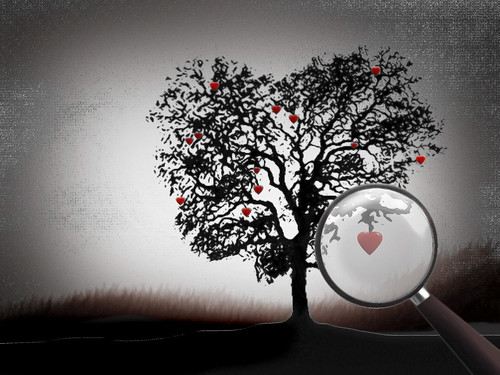
Two of my (30+) Aussie friends face the same woes of the heart - how to deal with residual romantic feelings for someone other than their current partners - and have asked me for some counsel. I don't really know what to advise. I suspect that most people experience this kind of chaos over the course of life, probably repeatedly, and it's just another thing that's kept from us as youngsters. This secrecy means that when we, as young adults, come to face these challenges we feel guilty and alone, which, amongst many other things, then serves to endow our illegal love object with an unhelpful aura of enhanced meaning.
I can already sense comments (either written or mental) along the lines of "true, adult love is about working hard at it and not being selfish." Yeah, well, they're kinda valid comments, thank you, but, in these cases, and I probably didn't make this clear enough, we're not just talking about that cheap sizzle of newness, but also crucially important variables: being a little older than twenty and therefore more certain of your relationship needs (but conversely more fearful of giving the new relationship roulette wheel another spin).
So (and this is stream of consciousness advice, competely unplugged, so I hope you are still onboard: toot-toot!), I think it really boils down to whether your absolute needs are being met in your current relationship. I think you have to have an honest look at your relationship as it stands, why you are with the person (fear of being alone should not be a top answer!), and whether you are compatible. I spotted this site called Relationship Gym a while back when I was supporting a friend going through a break-up. You should have a look at it. It's all about identifying the person you want to be with by examing your respective needs, values and goals. I imagine the guy who runs the site as Frank T.J. Mackey (Tom Cruise's character in Magnolia), but that says more about me because actually he seems very good at his job (his approach has an in-built bias towards the current relationship) and he not a hater of women. And no, I would definitely not tell illegal love object. That would just cause a lot of trouble for a lot of people, most especially for you. If you're going to leave your current relationship, you have to be able to do it without the safety net (which will end up being a sticky web) of a new relationship.
Finally though, I am not 100% resolved on the whole issue of "you've made a commitment (of some sort) when you were a teenager/young adult and therefore should grin and bear it until you die." Even knowing what I know about human history, I feel obliged to suggest (flippantly) that these challenges are a particular function of the capricious, diposable world we leave it etc, etc, but I don't believe that. Plus, I am not sure whether worthwhile ideals like not being entitled, reckless and wasteful mean that you have to stick at something that is in constant tension with your needs (presuming your needs aren't fanciful) especially when children are not involved.
What would you advise?
* * *
Meanwhile, over the past week, four of my guy friends (all post-grads) have asked me for reassurance that they're not "idiots", that they're capable of scholarly writing at this level, and that they did not peak too early in their academic careers...Sound familiar? Goes to show that, contrary to some findings in the academic literature, women are not necessarily more likely to vocalise the emotional consequences of their work. I have boy-men revealing all sorts of insecurities and crises about their academic lives to me. Admittedly their purges tend to be shorter than those of my lady friends (who also tend to be repeat clients). Maybe we need some more female researchers asking men about their emotional labour and its effects.
Subscribe to:
Posts (Atom)