Showing posts with label siblings. Show all posts

Thursday, 2 April 2009

When it Comes to Siblings...

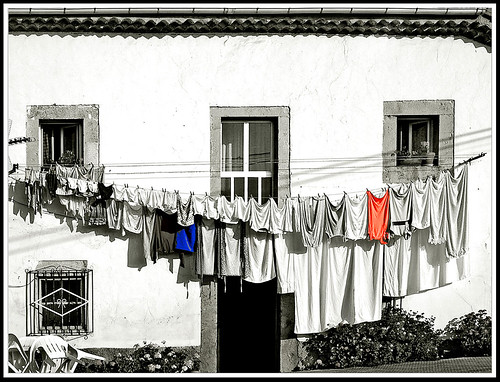
photo by: Iapidim

A while back, a reader asked me to help her improve her relationships with her siblings. It has taken me a while to tackle this because I think I was subconsciously pooped after analysing my relationship with my twin.

I come from a vast litter so I feel reasonably qualified to say something about this. From my experience, deciding and being prepared to work (for a long time if required) to redefine the terms of engagement with your brothers and sisters is crucial. It's not a given that these relationships make the transition from childhood relationships (and the mentality that goes with being needy, super-sensitive little people) naturally. This, of course, involves being honest about what you're bringing to the relationship table and whether and how you're allowing it to grow or not.

You can start by stating (calmly and sometimes repeatedly) to yourself and potentially to your a sibling things like, "I do not want to talk to you like this. This is a negative pattern that may have been OK when we were younger, but we're adults now."

I have had to say statements like this (in a more natural, me-form) to certain family members, and it's definitely been the general ethos for my own reflections. It's a delicate blend of big and small things. The small things, in my experience work better.

To this end, I have asked myself things like: Are my brothers and sisters balcony or basement people? Are they cheering me on and affirming me or dragging me down? Which one am I to them? I have borrowed these phrases, by the way, rather recklessly from Joyce Landorf, whose work I have never read and whom I am fairly certain is more clappy (and giving, and great!) than me. But I think it's a wonderful metaphor for nicely streamlining people in your life (often just for a short while) and also for being more honest about your behaviour towards others.

Of course, there is a lot more guilt and obligation when it comes to family and sometimes, particularly with parents and older relatives, you can never fully escape these expected patterns of behaviour. It's often very difficult and unsettling for family, particularly parents, to revise their concepts and expectations of you.

In some distressing cases, I think having a clean, finite break is healthy. It's often hard enough to be kind and aware to strong, positive people around you, let alone people who are emotionally greedy and manipulative etc. so sometimes you need a circuit breaker. You don't have to announce this in some impassioned way. You can just quietly give yourself some time and space to recharge.

I think when there is tension with family members the main things to work on from your end are being aware and self-disciplined about your own mental state before entering conversations, and carefully watching how much emotional baggage you bring into an interaction.

I think that last point's essential, really. You have to be able let go of the trailer of rubbish from the past; to not expect some kind of definitive, consensual, formal family statement of what exactly happened in your childhood and adolescence and who was treated how and to what effect. Part of being an adult, I think, is to decide to endorse your own version of reality, knowing that memory distorts and tends to focus on the negative, traumatic, mortifying experiences over the more normal, and even blissful ones, and then to put it away on the shelf.

Of course, siblings often want you to sign off on their versions too, which can sometimes mean getting embroiled in history wars. This requires knowing when to validate or gently test their histories and when to simply avoid these moves. You have to make your own boundaries according to what you're prepared to suffer and lose (sometimes you just don't want to lose a couple of hours of your time trawling through the archives and then an evening after recovering).

As with all relationships, relating to siblings is about constantly working on being present, calm and assertive (using as much 'When this happens, I feel...' language as possible, as distinct from 'you are a...' language). I read somewhere that often we think we're being adults when we criticise others by using behaviour-based examples, but this tone can often disguise a childish tendency to start introducing evidence from every part and time of the other person's life. Sometimes we get empowered by others (finally!) agreeing with our frustrations and that can give us a surge of energy to start tackling all the grievances you've ever had with that person. That's not fair.

Another thing that is often not fair (or useful) is that, with siblings, we are so much more likely to solve their problems when they actually seek validation (simple recognition of the underlying emotion). To make it even more fraught, we're also more likely to bring in examples from ten years ago, or to stitch the incident to another one, or worst still to use it against the person as an example of some wider, less functional characteristic they have or have had. These approaches are too blunt to make any pretty affinity shapes and should be traded in.

It's a big deal when a family member gives you a compliment. We're often still like little doggies in need of a Pedigree Gravy Bone. Give compliments, laugh, enjoy them.

I am lucky that my family is loving, fairly open, intelligent, humourous, and very supportive. Sometimes we can sometimes be a little rough in our delivery (the funny and the harsh are not always distinguishable chez nous), but I think for the most part we try to be gentle and positive with each other. There's an implicit understanding that now that we're all over 21 and living our own lives, it's a choice to be in each other's lives beyond family get-togethers. "You can go off people, you know"- this is something I say to my family sometimes to playfully remind them that my love and admiration are not unconditional! No, really, I think we actually want to be friends and simply like each other and these make it easier.

The last thing I would say though is that it's very important not to catastrophise when you have a tense or horrible interaction with a family member. You have to avoid linking the incident to the many other similar instances stored away in your file. You also have to challenge thoughts like, "We are never be able to get along" or "[name] is always going to be a negative influence in my life."

At the risk of sounding like I am trivialising individual cases (there's a spectrum of hurt and complexity in family backgrounds), sometimes when you argue with siblings you're just hungry, overworked and/or tired, and simply don't quite have the mental resources or social sanctions (that help regulate other friendships) not to fall back into bad habits. But that happens and you have to forgive yourself quickly and just try better next time.

For what it's worth, I have to deal with that pattern daily with almost everyone in some small way. I am often saying snippy things, declaring my worries or painting potential crises to my loved-ones only to realise after that I just needed a hearty meal, a walk outside, a quick kip or a kind word. So, yeah, being able to feed, walk and assure yourself and put yourself to bed when necessary are also important skills in adult relationships, including kinships.

Anyone else have any ideas for dealing with sibling difficulties?

Family: Please read 'comments' for clarification. I am certainly not in any conflict with any of you guys. It's all very peachy and positive (and tacit), as it is, thankfully, almost all of the time...

Saturday, 7 March 2009

Lowering the Tone

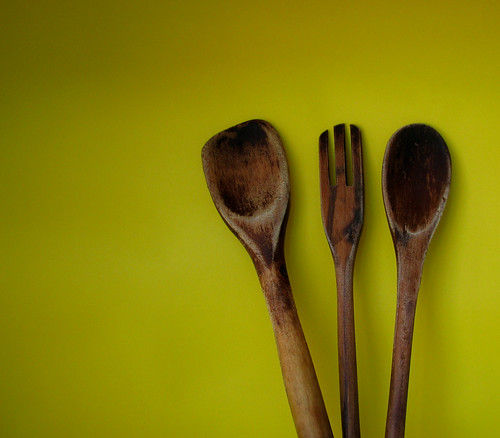
photo by Anie*

Dr. No recently started a (very amusing) blog post with the following:

You leave me no choice, I have to go there. If you are thinking: Where, where are we going Dr. No? Will it be fun? Should I pack a bag? Is sunscreen necessary? Should I cancel my classes? The answer, I am sorry to say, is no, no, no, and sure- why the hell not. We are going to a frightening place, a juvenile place, the kind of place where humor abounds for 12 year olds. A place where adults with graduate degrees should not go. Yet, I have to go there.

I would like to humbly invoke the same warning here. I need to share this small experience so that I can freeze it and have a good look at it. It seems to represent one of two or three types of interactions (along with intelligence and "who is more scared of this cricket ball?" competitions) I had to adapt to as someone who grew up with countless brothers. Being away from them, I tend to forget just how fantastically hectic, obscene and brash they can be. Just in case this gets confusing, I wrote this introduction last. What you're about to read was typed as the event was happening:

I just texted my brother to tell him to pop by my place before he heads off to London tomorrow. (He is staying in College, almost directly across the lawn from my place. This means he caught me dancing in my living room on Thursday and tried to mimic me.) This was his reply: "Yeah when you pull back the curtain, I'll be right at the window wearing only my Speedos and brandishing a spatula."

I just want to pull his little cheeks. I love this kind of banter. It gets me absolutely nowhere in this town, but I love it (and I can still refer to academic debates in casual conversations as well as anyone else - I just don't do it as often. So there!).

Just got another text, right now: "See, I am practising with the spatula now" and...yep, just checked, he is indeed in his kitchen waving his wooden spoon around like a drover.

I have been waving back with my phone in my hand, laughing like a proud dork. Another text has just come in: "But tomorrow morning, I'll still be on your window sill. You'll love it."

I can't tell you what precisely my reply was, but essentially I suggested that I would only love it if he whacked his own bottom and publicly apologised for something ridiculous he did when he visited last time.

Anyway (ahem), back to editing a couple of chapters of my thesis. It's Saturday night and I am on page 16/94. It brings to mind an email I received from a friend earlier today that had this in it: "Surely not too much longer." Will award that a 5.5/10 and file it away with the others. Please feel free to send in some crackers of your own for the prize of most well-meaning but unhelpful comment ever made to a PhD student/academic/writer of any sort.

Friday, 6 March 2009

Good Times (is there a mood pattern emerging?)


Hungarian posters

So I am not sure why I included those posters. I spotted them at Momento Park in Budapest over the Christmas break and I just think they're pretty terrific in a very superficial way.

My brother is in town from as a visiting scholar from CEU, Budapest (a nice connection to the posters?). It's super to have him around, although old habits creep back so quickly - like when he commented on my kitchen being "clean" (as in dirty) within the first few hours of seeing me and later when I told him quite sternly that I was not going to watch another YouTube clip that he wanted to show me. We both chose to brush off these comments instead of engage in a snip fest from the mid-90s. Well done to us! You really do have to let go of a lot of psychological baggage when it comes to relationships with adult siblings and enjoy and respect them as friends. It's a delicate thing. I have now seen him twice in three months after a three year absence - he usually lives in Africa (to save the world! Toot-toot!) and we haven't managed to coordinate our trips back to Australia.

An assortment of around fifteen friends from my Department, my College and other areas of life met up last night in one of my favourite pubs here, the Gardener's Arms, to welcome him over dinner and a few drinks. Good food, good chat, good times. One of my friends theatrically told us all how much she hates people (especially now she is writing-up). She says she hates people who want too much of her time and energy (who tell boring stories about their grocery shopping and get offended when she glazes over) and she hates people who are too good for her (who have already been published and sorted out their postdocs). She says that running is her only cure against daily hatefulness. Whatever this blog may suggest, I am going to miss this place...

It's bright and sunny today and I can see purple and yellow fresias from my window. I am working fairly effectively and I have a good feeling about the weekend ahead. I just have to avoid those afternoon crashes when I haven't eaten properly and think chocolate and Facebook will help me through. I hope you have a lovely one.

Thursday, 26 February 2009

On Being a Twin

photo by shashchatter

A friend, make that a great friend, asked me to describe what it's like to be a twin. I wish I had more time and energy to write a proper, coherent story about it, but as it is, with 30 000 words due by the end of the weekend, I can only manage stream of consciousness-style snippets.

I am a fraternal twin, which is very different to being an identical twin, but not as different as you may think. We're both female.

I see being a twin as entering a marriage in the womb. It's intense, with all these feelings of joy, security, investment and trust in the other. But seeing as it's a marriage that starts when you're a bunch of cells, you don't have all the skills and presence of mind you need to manage this relationship in a healthy way throughout all the different phases of life, to let the other person grow, be loved by other people, to allow their needs to change. It requires a constant building and rebuilding to work.

When you are young as a twin, you don't know what it is like to have your own time, and when you do have it, say on a humid Saturday afternoon, it feels like an act of defiance or betrayal (either yours or your twin's).

I always felt bitterly insulted when cousins and friends only invited one of us to play, which was usually her because she was less likely to be bitter about anything as a child. I remember I made a rule to myself at a school friend's birthday party once (I'd say I was 7 or 8) that if the two older sisters were nicer to my twin than to me, then I would have to take some action. I was sick of being the one who introduced us both at the door, but got no recognition for it. As I had predicted, they picked her up and tickled her. She laughed more freely than me and had lighter hair and a lighter presence. I felt completely justified in taking a take-home lolly (sweet/candy) bag up to my friend's room and eating them on her bed. It wasn't comfort eating (I am less likely to eat when stressed), it was the world's punishment.

I remember my childhood as connected to my twin, brimming with this simple affection of ours. We sang songs to ease the other to sleep, stuck to our agreements about who would turn off the light each night, gave each other back rubs, washed each other's hair in the bath, walked to the shops and the park together, organised our clothes, role played with our antique doll collection (instead of Barbies because new toys in our house tended to be more "male", like Transformers, Lego, Star Wars figurines and The Castle of Greyskull), we made up dances and plays. We liked to keep things equal between us, which meant we would make sure any gifts, lollies or food - any external goods really - were allocated evenly between us. We had a little commune situation going on.

My twin was a prodigious gymnast and athlete, and made friends very easily because she was so warm and theatrical. Whenever she had public successes of any sort, I would feel immensely proud and even possessive in the way I imagine a parent feels. But it's different when you're in a little body that is bursing with exultation. It's quite overwhelming. Later on, I would sometimes feel regretful that I could not show this pride to her as easily as I did when I was younger. I felt like someone who had been abandoned, the forgotten parent who knows they will only get acknowledged at the end of the movie when the hero says that they were in their heart all along.

A perfect day was usually at the beach during the Summer holidays when I organised where we would put our towels and she would encourage me to swim further out towards the surfers.

We made each other laugh a lot. Sometimes just a facial expression or a hinted gesture would be enough. That's all it takes when you know someone.

If things were momentarily distant, then an easy way to bridge the gap would be to tell the other person about some routine injustice or unpleasant incident at school or at home, which would be followed by ritualised comfort and support from the other. Sometimes this would amplify into formal pledges to stick up for each other against anyone and anything. Often my twin would cry if I was crying about something. It made me feel so safe to have one person who I knew was on my side and who understood my position in the world.

This promise to defend one another was most often implied. A twin is always very careful not to outright disagree with the other. We learn (the hard way) to suggest the things the other may not like to hear, just as you need to do in a romantic relationship. But ultimately we know early on that we have to make our twin aware that we're on their team regardless of how irrational or sentimental we think they are being. I have noticed this in many twins. If you breach this secret code, it is the most tragic, awful, crushing thing. It's a form of treachery. That doesn't change, from times when you join in schoolyard teasing of your twin or choose a team of any sort that isn't the same as theirs, to shaming or rejecting them in front of your high school friends, to siding with siblings in adult confrontations, the list goes on. These things don't change.

Twins hurt one another in a way that no one else can. This means that they can also soothe and love one another in a way that no one else can. It's an intense affair.


photo by il0vePullip

Growing up, my twin was involved in all sorts of accidents, medical emergencies and physical injuries. I still remember all these things so definitely: a near drowning at three while I stood paralysed by the pool and watched her red, panicky, crying face bob in and out of the water, on a skiing holiday having to let go of her 8 year old hands to let her fall off the rising chairlift that hadn't scooped her up properly, around the same time hearing her plummet into an orchestra pit at a ballet rehearsal and me laughing in the wings because I was so full of adrenaline. She chipped her head twice, and was severerly allergic to bees and various bushes.

When you are a twin, you watch suffering and illness from a vantage point that you wouldn't as a single child even with siblings, especially when you share a room (as we did until we were 15!). I never got used to hearing my sister start to cough in the night because she was choking on a nose bleed. You hear the other person have restless or tearful nights.

I developed a sense of super-responsibility for my twin, something I came to resent later on, in my early teens because I was far more interested in creating the right impressions in front of my friends. I struggled with it again in my early twenties as we both sought to separate from the family, and particularly the twinship bond that seemed so heavy.

My twin is very generous. From an early age, she would often tell me that she would have a child for me if I could not bear my own. I used to tell people that she had made this promise. My twin said something to me a decade ago that checks my behaviour to this day. She said that being stressed and tired is not a valid excuse for repeated unkindness.

I think my twin and I developed as a perfect human but in two separate bodies. If you put us together we would be one of the most intelligent, compassionate, athletic, talented, creative, courageous, humourous and socially capable people going around. I am not saying we only got half these things each or that there is a clean demarcation of traits (we are still full humans, not to mention siblings in a wider community of people!). But it would be true, I think, to say that we fostered certain aspects of our personality in response to the other. If we thought that the other twin was probably going to be more successful in a certain area or find a certain personality trait or skill a little easier to ripen, we'd more or less hand it over. This was in part out of generosity, and in part out of competitiveness.

This growing against each other was a result of both nature and nurture. Looking back now, I would say more nurture than nature. Outsiders (even if well-meaning), particularly family members, tend to categorise twins; to put limits on the identities of the two people involved. This can be done in small, but significant acts, like asking a twin who is better/smarter/sportier/prettier/taller/skinnier/more popular etc. It can also be done in big ways with labels, entrenched expectations, and favouritism. It was hard as a young person to resist all these divisions and we started to define ourselves against each other and even take some pride in those concepts. Then we began to hate the concepts.

We both tend to become anxious if we spent too much time on our own, and like to reach consensus and understanding with people. We're used to having a partner in crime, someone to share life with. We both find it difficult to let go of relationships of any sort even when they may not be good for us.

Someone in Oxford recently said that I don't seem like a twin. But I know I have the mindset of a twin - the well-being of my twin has always affected my own even while I have been so far away from her. If she is not 100% healthy and happy, I am not. No matter how positive my own material and emotional circumstances, if she is not at peace, I am not. I identify with the life of my twin in a way that is distinctly different to the ways in which the rest of my family's lives impact on my self-concepts and behaviour.

You always give a twin another chance, which is something that is abused over and over, but also something that allows you to be truly tender and gives you a quiet sense of freedom from everything else.


photo by +fatman+